Fence line clearing is the work of cutting back the brush, saplings, and small trees that have grown up along a property line or fence row. The fastest way to do it is forestry mulching, which grinds the whole strip down to a mulch layer in one pass with no piles to burn or haul. On most central Wisconsin properties a fence line job runs a flat rate based on length and how thick the growth is, and a clean strip of a few hundred feet is often a half-day of work.
We run fence line clearing out of Oxford across our eight-county area, and it is one of the calls we get most in spring and fall. Old field edges, pasture lines, and property boundaries around Marquette, Adams, and Columbia counties fill in fast with buckthorn, popple, sumac, and box elder. Give it ten years and a clean fence row turns into a wall of brush you cannot see through or walk along. Here is what fence line clearing costs in central Wisconsin, the ways to do it, and what to expect when we show up.
What Is Fence Line Clearing?
Fence line clearing means cutting back the woody growth that has taken over the strip along a fence or property line. That includes brush, saplings, grapevine, and the small trees that seed in where a mower or brush hog cannot reach. The goal is a clean, open line you can see down, walk, fence, or mow again.
It comes up for a few reasons. Farmers want their field edges and pasture lines back so they can run equipment and keep livestock in. Hunters want a clear boundary and shooting lanes. Landowners want to find the old fence, settle where the line actually runs, or put up a new fence on clean ground. Whatever the reason, the work is the same: get the brush off the strip and leave it workable.
How Much Does Fence Line Clearing Cost in Wisconsin?
Cost comes down to two things: how long the fence line is and how thick the growth has gotten. A short, brushy strip is a quick job. A quarter mile of line with trees grown into the old fence takes real time. Here is the range we work in, priced by how heavy the growth is along the strip.
| Overgrowth | What It Looks Like | Typical Cost |
|---|---|---|
| Light | Grass, weeds, and scattered brush, stems under 2 in, line still walkable | $400 to $600 per acre equivalent |
| Moderate | Dense brush and saplings 2 to 5 in, vines, a few small trees in the line | $600 to $1,200 per acre equivalent |
| Heavy | Thick brush with mature trees grown into the old fence, larger stems | $1,500+ per acre equivalent |
A fence line is a narrow strip, not a square field, so we usually price the whole job as one flat number rather than per acre. The acre-equivalent figures above are just a way to gauge how density moves the price. A short clean strip can be a flat half-day rate. A long, heavily grown line that needs trees felled first costs more. Small jobs carry a minimum because loading the machine, trailering it out, and unloading costs the same whether the line is two hundred feet or two thousand. We give you one price for the whole strip after a free look at the property, so you know the number before any work starts. For how density drives mulching cost across the region, our guide on forestry mulching cost in Wisconsin walks through it in more detail.
What Is the Best Way to Clear an Overgrown Fence Line?
For most central Wisconsin fence lines, forestry mulching is the best way to do it. There are three common methods, and which one fits depends on how grown-up the line is.
Forestry Mulching
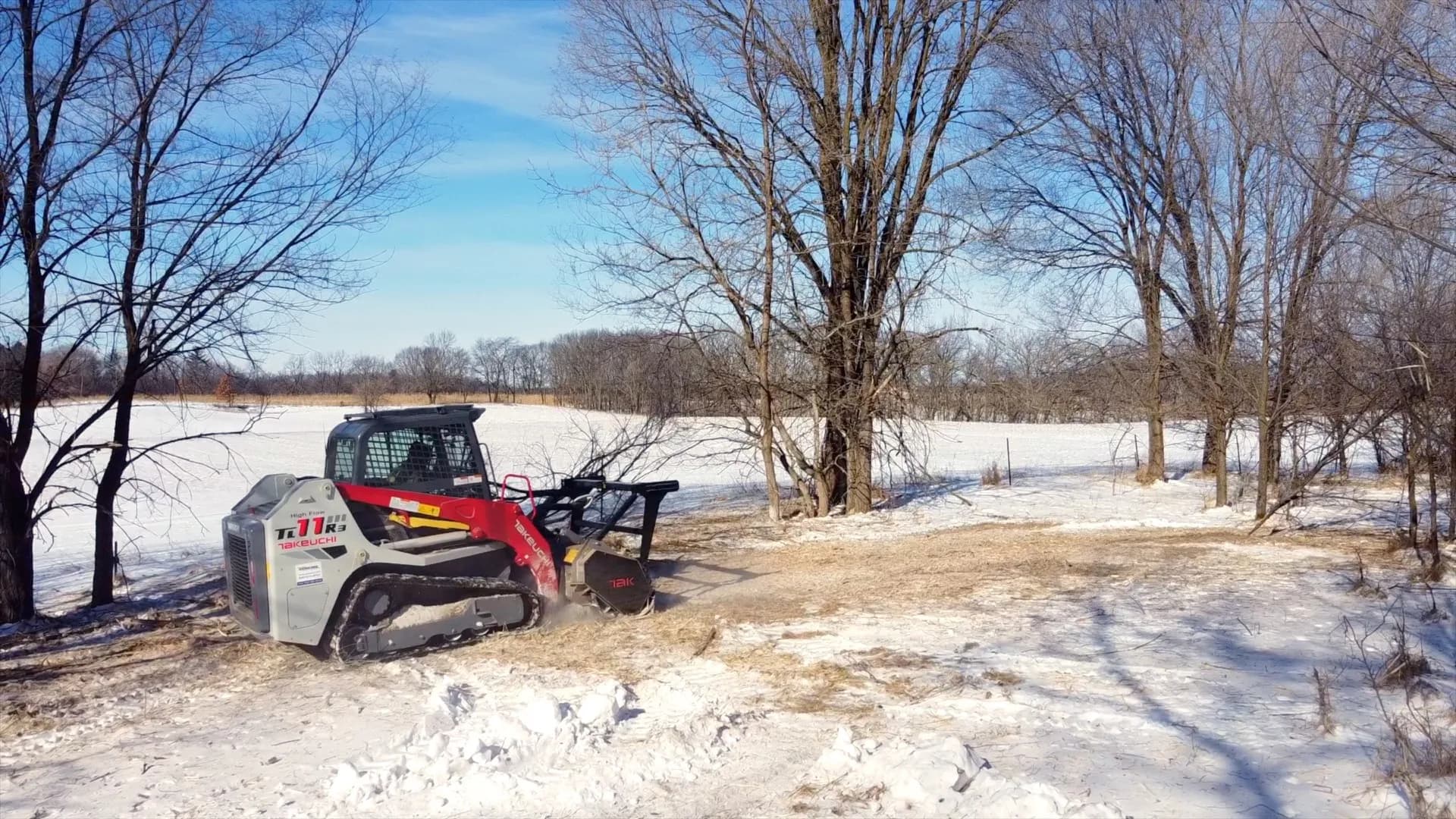
A skid steer with a mulching head drives the strip and grinds the brush and small trees into a mulch layer right where they stood. One machine, one operator, one pass. Nothing gets piled, burned, or hauled. The mulch breaks down over a season and holds the soil. This is what we reach for on brushy lines and lines with saplings and small trees, which covers most of what we see. You can read how the process works on our forestry mulching service page.
Brush Hogging or Mowing
If the line is mostly grass, weeds, and light brush with nothing woody to speak of, a brush hog or rotary cutter can knock it down. It is quick and cheap on light growth. The catch is that a brush hog cannot touch anything more than an inch or two thick, and it leaves stems standing that grow right back. Once saplings and real brush move in, mowing stops being enough.
Hand Cutting and Hauling
The old way is a chainsaw, a brush cutter, and a lot of dragging. It works on a short line and gives you the most control around a standing fence you want to keep. It is also slow, and you are left with piles to burn or haul and stems that resprout unless you treat them. For anything longer than a short stretch, the cost in time usually outweighs the savings.
If the line has invasive brush like buckthorn or honeysuckle, both on the Wisconsin DNR's NR 40 list, mulching is only the first step. The cut stumps need treating or they come back thicker. We cover that follow-up in our piece on buckthorn removal in Wisconsin.
Why Forestry Mulching Works Well on Central Wisconsin Fence Lines
The ground and the growth around here suit a mulcher. Most of our fence lines run through sandy or loamy soil that firms up and holds the machine without rutting, so we can work the strip in most seasons. The growth tends to be brush, popple, box elder, and scrub that seeds into field edges, and that is exactly what a mulching head is built to chew.
- One pass, no cleanup. The brush goes down as mulch on the spot. No burn piles sitting on the line for weeks, no hauling, no torn-up dirt to fix afterward.
- Leaves the line workable. The strip comes out clean and level enough to mow, fence, or run equipment along right away. The mulch layer keeps the soil in place.
- Reaches what a mower cannot. A mulcher takes brush and stems a brush hog has to drive around, so you get the whole line cleared instead of a mowed path with brush still standing in it.
For a wider strip or a full edge that needs to go back to field or grade, our land clearing service handles the heavier work, and land management keeps lines, trails, and field edges in shape season to season.
When Is the Best Time to Clear a Fence Line?
You can clear a fence line in any season, but a few windows are better than others in central Wisconsin.
- Winter. Frozen ground holds the machine clean and the leaves are down, so you can see every stem and exactly where the line runs. It is a good time to get the work done before spring field season.
- Late fall. After the leaves drop and the ground firms up, access is good and the line is easy to read. This is a busy stretch for getting boundaries clean before winter.
- Early spring. Once the frost is out and the ground dries, spring is a strong time to clear a line before planting or before brush leafs out and thickens up again.
The stretch to be careful with is the spring thaw, when frost is coming out and the ground is softest. Even on sandy soil it pays to wait until things firm up. For more on seasonal timing, see our guide on the best time to clear land in Wisconsin.
Do You Need a Permit to Clear a Fence Line?
For most fence line clearing on your own rural land, no permit is needed. Cutting back brush and saplings along a property line you own falls outside any permit requirement in the counties we serve. Two things are worth checking first.
The first is the boundary itself. If you are clearing right on a line you share with a neighbor, be sure you know where the line actually runs before the brush comes off. An old fence is not always on the surveyed line. When there is any question, a survey or a talk with the neighbor saves a lot of grief. The second is water. If your fence line runs along a creek, lake, or wetland, clearing inside the shoreland zone can trigger county zoning rules or a DNR permit. Marquette, Adams, and Columbia counties all have shoreland along their lakes and rivers. When the line is near water, a quick call to county planning and zoning before the work starts is the safe move. We are glad to walk the line with you and flag anything that looks regulated, but the county is the final word.
What a Fence Line Clearing Job Looks Like, Start to Finish
Here is how a typical job runs once you reach out.
- Free on-site estimate. We come out, walk the line with you, and look at the length, the stem sizes, and where the boundary runs. You get a flat price for the whole strip.
- Schedule the work. We pick a window that fits your timeline and the ground conditions.
- Clear the line. The machine works the strip and grinds the brush down to mulch. Most lines clear quick once we are set up.
- Walk the finished line. We go over the cleared strip with you before we load up, so you are happy with how it looks.
Get a Free Fence Line Clearing Estimate
We clear overgrown fence lines, field edges, and property boundaries all over central Wisconsin, including Oxford, Montello, Westfield, Portage, Baraboo, and the rest of our eight-county area. Whether it is a short brushy strip or a quarter mile of line grown up in trees, we will come look and give you a straight price. Call (608) 292-3934 or request your free estimate online.
Last updated: June 2026
Frequently Asked Questions About Fence Line Clearing
How much does fence line clearing cost in Wisconsin?
Most fence line jobs are priced as one flat number based on the length of the line and how thick the growth is. Light, brushy strips sit at the low end, dense lines with saplings in the middle, and heavy lines with mature trees grown into the old fence at the top. A short clean strip can be a flat half-day rate, while a long, heavily grown line costs more. Small jobs carry a minimum because the machine still has to be loaded, trailered out, and unloaded. We give one flat price after a free on-site look.
What is the best way to clear an overgrown fence line?
For most central Wisconsin fence lines, forestry mulching is the best method. A skid steer with a mulching head grinds the brush and small trees into a mulch layer in one pass, with no piles to burn or haul. Brush hogging works only on light grass and weeds, and hand cutting is slow and leaves piles and resprouting stems. Mulching reaches what a mower cannot and leaves the line clean and workable.
Can a forestry mulcher clear trees that have grown into a fence?
Yes, up to a point. A mulcher handles brush, saplings, and trees up to roughly 8 inches across, which covers most fence line growth. Larger trees grown into an old fence usually get felled and the mulcher cleans up the rest. If you want to keep a standing fence, we work around it carefully or hand cut close to it. We size up the line during the free estimate and price the job accordingly.
When is the best time to clear a fence line?
Winter and late fall are ideal because the leaves are down, you can see every stem and where the line runs, and frozen or firm ground holds the machine clean. Early spring after the frost is out is also strong, before brush leafs out again. The spring thaw is the softest stretch and worth waiting out, even on sandy soil.
Do I need a permit to clear a fence line?
Most fence line clearing on your own rural land does not need a permit. Two things are worth checking first. Be sure you know where the boundary actually runs, since an old fence is not always on the surveyed line. And if the line is near a creek, lake, or wetland, clearing inside the shoreland zone can trigger county zoning rules or a DNR permit. Marquette, Adams, and Columbia counties all have shoreland, so call county planning and zoning before starting when the line is near water.
Will the brush grow back after the fence line is cleared?
Grass and weeds will come back and can be kept in check with a mower. Woody brush like buckthorn and honeysuckle, both on the Wisconsin DNR's NR 40 list, will resprout from the stumps unless they are treated after cutting. If your line has invasive brush, we handle the cut-stump treatment so it does not come back thicker. Keeping the line mowed once or twice a year after clearing holds it open for the long run.
Do you clear fence lines near Oxford and Montello?
Yes. We clear fence lines, field edges, and property boundaries across our eight-county central Wisconsin area from our base in Oxford, including Montello, Westfield, Portage, Baraboo, and Wisconsin Dells. Call (608) 292-3934 or request a free estimate online.