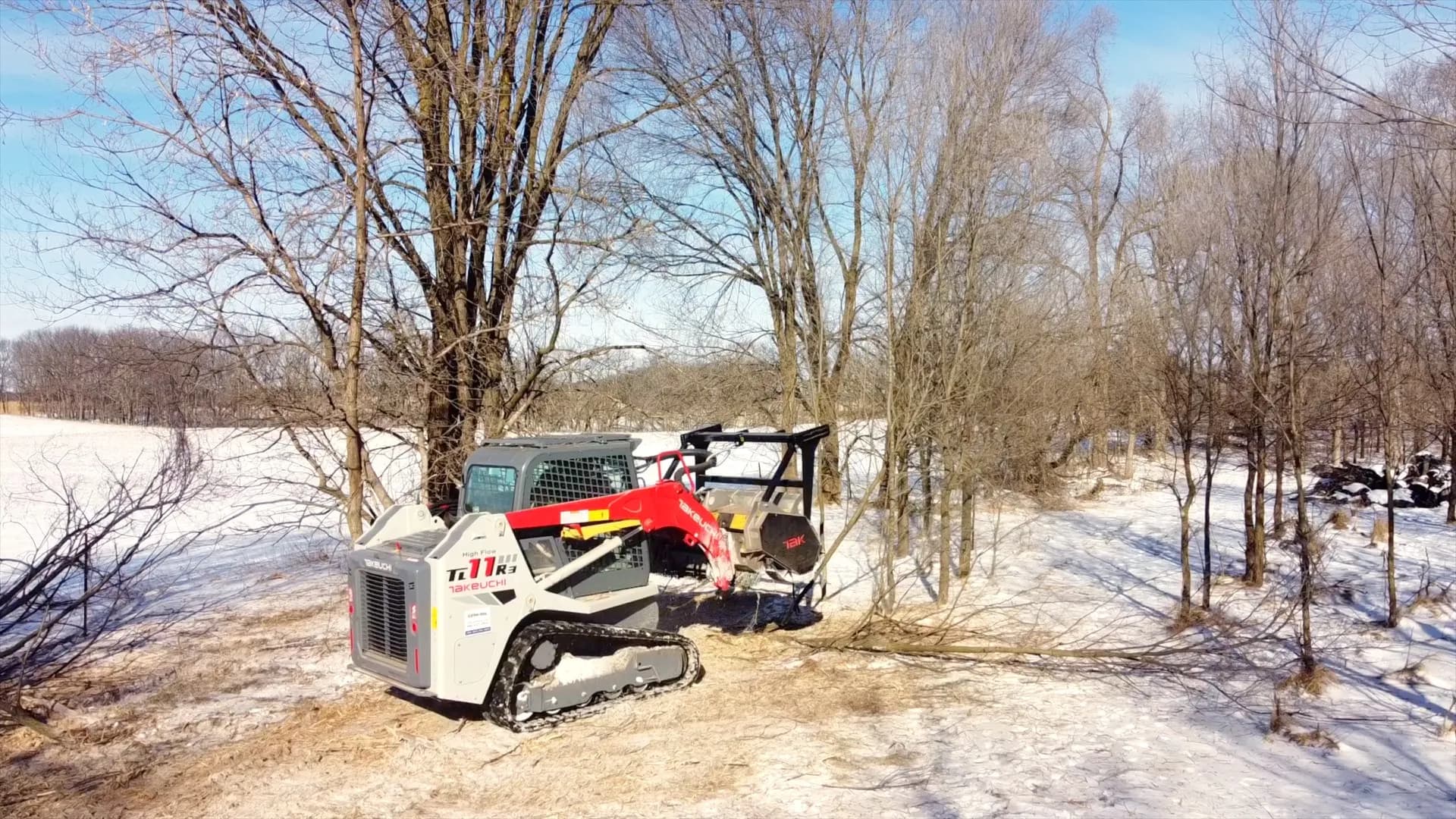
The best time to clear land in Wisconsin is winter (December through February) when frozen ground supports heavy equipment without rutting, dormant vegetation processes faster, and pricing is often lower. That said, we clear land year-round, and each season has its advantages depending on your project, timeline, and the specific conditions on your property.
We run our forestry mulching and land clearing equipment 12 months a year from our base in Oxford, WI. Here is what we have learned about timing in central Wisconsin.
Winter Land Clearing (December - February)
Winter is our favorite time to clear land, and for good reason.
Frozen ground is the biggest advantage. When the ground freezes 12 to 18 inches deep (which happens most winters in central Wisconsin by mid-December), our equipment rolls across the surface without sinking in or creating ruts. This is a huge deal on properties with soft or wet soils. Sites that would be a muddy mess in spring or fall are rock-solid in January.
Other winter advantages:
- No leaves on deciduous trees: Better visibility for the operator means more efficient clearing and easier work around keep trees.
- Dormant vegetation: Trees and brush are dormant, with less moisture in the wood. They process through the mulcher faster and produce a finer mulch.
- No nesting birds: No risk of disturbing active bird nests, which can be a concern during spring and summer clearing near wetlands.
- Easier scheduling: Winter is our slower season. We can often start jobs sooner and have more flexible scheduling.
- Potential cost savings: We sometimes offer better pricing on winter work because of the improved production rates and lower demand.
The one downside: If the snow is deep (over 12 inches), it can slow production because the machine has to push through snow to reach the brush. In the Central Sands area around Westfield and Oxford, snow depth is usually manageable. Farther north toward Stevens Point and Wisconsin Rapids, deeper snow can be more of a factor.
Spring Land Clearing (March - May)
Spring is a mixed bag in Wisconsin. It can be the best time or the worst time, depending on conditions.
Early spring (March): The ground is still frozen or just starting to thaw. If we catch the tail end of frost, ground conditions are still good. This is a solid window to get work done.
Spring thaw (late March - April): This is the trickiest period. Frost comes out of the ground, snow melts, and everything turns soft. Clay soils in Columbia County and Sauk County can become impassable mud. Sandy Central Sands soils drain faster and recover sooner, but even they get soft during peak thaw.
Late spring (May): The ground has firmed up, but vegetation is growing fast. Leaves are filling in, which reduces operator visibility. However, late spring is an excellent time to assess your property before the full leaf canopy blocks your view of the understory. Walk your land in May and plan your clearing project.
Bird nesting season: Wisconsin DNR recommends avoiding clearing activities near wetlands and waterways from April 15 through August 15 to protect nesting migratory birds. This is not a strict law on private upland property, but it is something to be aware of if your land borders wetlands or if you are working in a sensitive habitat area.
Summer Land Clearing (June - August)
Summer is peak season for land clearing in Wisconsin. Long days, warm temperatures, and firm ground make for productive work.
- Ground conditions: Generally good to excellent. The Central Sands area has the best summer ground conditions because sandy soil drains immediately after rain.
- Longest work days: 14 to 15 hours of daylight means more production per day.
- Full leaf canopy: The biggest downside. Dense foliage makes it harder to see what you are cutting through. The operator has to work more carefully, which can slow production slightly.
- Peak demand: Summer is our busiest season. Plan ahead and book early if you want summer work done.
- Heat and insects: Not a factor for the machine, but the operator takes more breaks in 90-degree heat with mosquitoes and deer flies. This is just reality for outdoor work in Wisconsin.
Summer is also a good time for brush mowing and bush hogging to maintain previously cleared areas and keep them from growing back.
Fall Land Clearing (September - November)
Fall is an underrated season for land clearing and is often ideal for several reasons.
- Leaf drop: Once leaves fall in October, visibility is excellent. The operator can see exactly what they are working through, making it easy to selectively keep trees while clearing the brush around them.
- Firm ground: After the dry summer months, ground conditions are usually firm into November. The sandy Central Sands soil is especially good in fall.
- Food plot prep timing: Fall is the right time to clear land for spring food plots. Clear in October or November, let the mulch start breaking down over winter, and the ground is ready for planting by the following May.
- Cooler temperatures: Comfortable working conditions for the operator mean better production.
Hunting season considerations: If your property or neighboring properties are used for deer hunting, schedule clearing work to avoid the November firearms season. Neighbors will not appreciate heavy equipment running next door during the nine-day gun season. We are hunters ourselves and schedule around this.
Late fall freeze: In late November, the ground starts freezing in most of central Wisconsin. This is actually an advantage. Early frozen ground gives great working conditions without the deep snow of mid-winter.
Wisconsin Soil Types and Year-Round Workability
Not all Wisconsin soil responds the same to seasonal conditions. Here is how the main soil types in our service area handle different seasons.
Central Sands (Adams, Marquette, Waushara Counties)
Sandy soil drains fast and stays firm in most conditions. We can work on Central Sands properties almost year-round, even during spring thaw. This is the easiest terrain in our service area. Properties around Oxford, Westfield, Neshkoro, Wautoma, and Coloma all benefit from these conditions.
Clay and Loam Soils (Columbia, Sauk, Dane Counties)
Clay-heavy soils around Portage, Baraboo, and Beaver Dam need dry or frozen conditions. Wet clay is a recipe for deep ruts and stuck equipment. We avoid working clay soils during spring thaw and after heavy rains. Winter and dry fall are the best windows for these areas.
Mixed Soils (Wood, Juneau, Portage Counties)
Properties around Wisconsin Rapids, Mauston, and Stevens Point have a mix of sandy and loamy soils. These are generally workable most of the year but can be soft in low spots during wet periods.
DNR Considerations for Clearing Timing
Wisconsin has several regulations that can affect when you clear land:
- Wetland buffers: DNR requires setbacks from mapped wetlands. Clearing near wetlands may require a permit regardless of season.
- Shoreland zoning: Properties within 300 feet of a navigable waterway or 1,000 feet of a lake have additional restrictions on vegetation removal. Check with your county zoning office.
- Endangered species: If your property has known endangered species habitat, clearing may be restricted during certain seasons. This is rare for most private land in central Wisconsin but worth checking for properties near state natural areas.
- Burning permits: If your clearing project involves any burning of brush piles, you need a DNR burning permit from January through May and anytime conditions are dry. Our forestry mulching process eliminates the need for burning entirely.
Our Recommendation
If your schedule allows it, plan your clearing project for one of these windows:
- Best: December through February (frozen ground, best conditions)
- Second best: October through November (leaf drop, firm ground, food plot prep)
- Third best: June through August (long days, dry conditions)
- Workable: Late March and May (avoid peak thaw in April on clay soils)
That said, we clear land year-round and will schedule your project whenever it works for you. Request a free estimate and we can discuss the best timing based on your specific property and soil conditions. We serve all of central Wisconsin from Oxford. Call (608) 292-3934.
Last updated: March 2026
Frequently Asked Questions About Land Clearing Timing
Can you clear land in winter in Wisconsin?
Yes, winter is actually the best season for land clearing in Wisconsin. Frozen ground supports heavy equipment without creating ruts, dormant trees process faster through the mulcher, and there are no nesting bird restrictions. We run our forestry mulching equipment year-round including through the winter months.
What month is cheapest for land clearing in Wisconsin?
December through February typically offers the best pricing for land clearing in Wisconsin. Frozen ground improves production rates, and lower seasonal demand means more scheduling flexibility. If your timeline is flexible, ask about winter rates when you request an estimate.
Should I avoid clearing land in spring in Wisconsin?
Avoid clearing during peak spring thaw in late March and April, especially on clay soils. The ground is soft and saturated, which leads to rutting and equipment access problems. Sandy Central Sands soils recover faster, but even they can be soft during peak thaw. Early March (still frozen) and May (firmed up) are better spring windows.
Do I need a DNR permit to clear land in Wisconsin?
For most private upland property, you do not need a DNR permit for clearing brush and small trees. You may need a permit if clearing near mapped wetlands, within shoreland zoning areas (300 feet of navigable water), or if the project involves large-scale timber removal. Contact your county zoning office or the local DNR office to confirm requirements for your property.
When should I clear land for a food plot in Wisconsin?
The best time to clear land for a food plot in Wisconsin is October through February. This gives the mulch layer time to start breaking down over winter. By the following May, the ground is ready for soil testing, lime application, and planting. If you clear in spring or summer, you can still plant that same season, but the mulch layer will need more time to decompose.