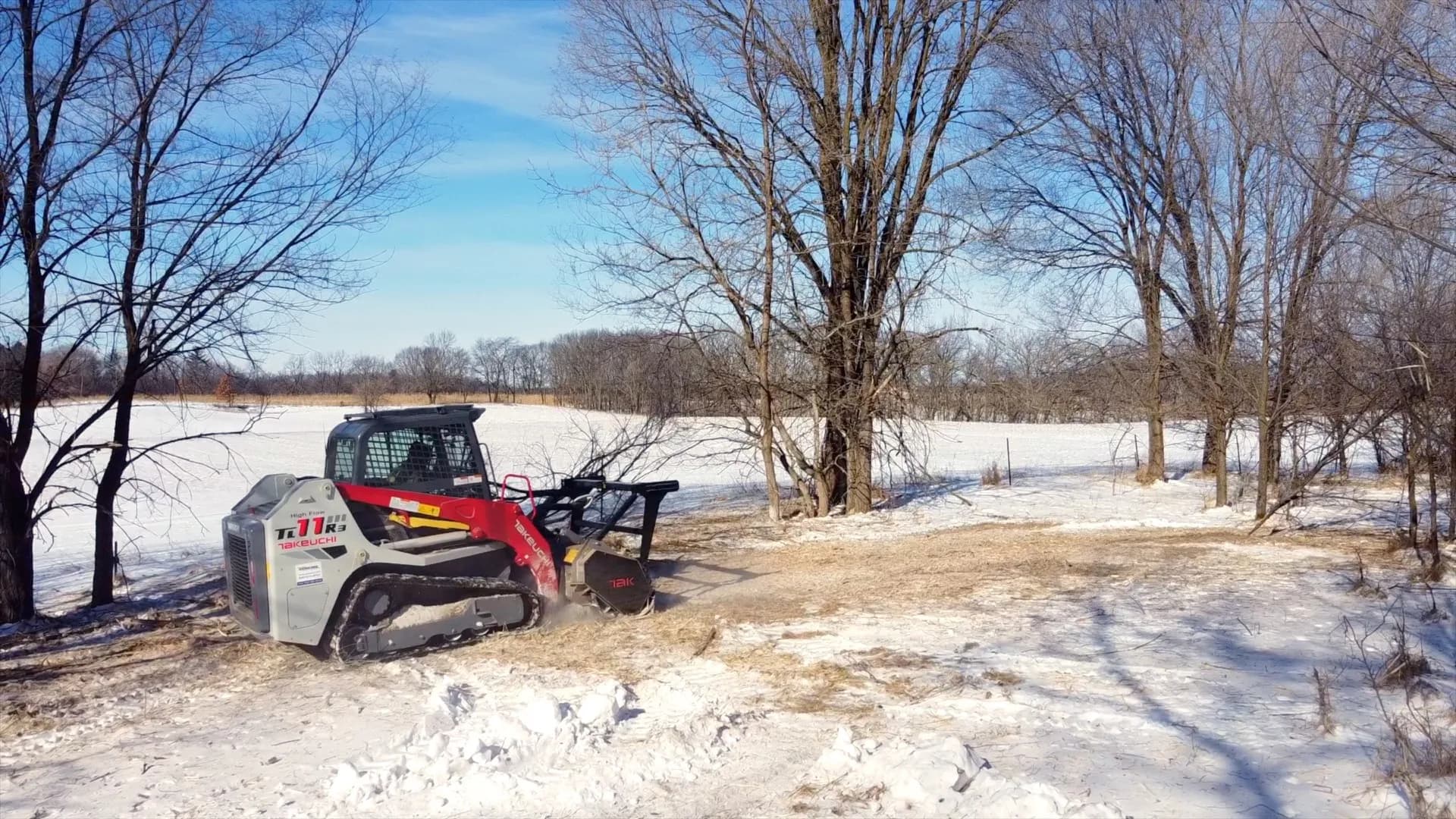
Forestry mulching is a land clearing method where a single machine grinds standing trees, brush, stumps, and undergrowth into a layer of wood chip mulch right on the ground. Unlike traditional clearing that requires cutting, piling, hauling, and burning, forestry mulching does it all in one pass with one operator. The mulch stays on-site, protecting the soil and breaking down naturally over one to two seasons.
We run a forestry mulching operation out of Oxford, WI, and this is the question we hear more than any other. Here is what you need to know.
How Does a Forestry Mulcher Work?
A forestry mulcher uses a high-speed rotating drum fitted with dozens of carbide-tipped cutting teeth. The drum spins at around 2,000 RPM and is mounted on a skid steer, compact track loader, or a dedicated mulching carrier. As the machine moves forward, the drum contacts trees, brush, and stumps, chewing them into small wood chips and depositing them directly on the ground.
Most machines can handle trees up to 6 to 8 inches in diameter in a single pass. For larger trees in the 10 to 14 inch range, we fell them first with a chainsaw and then run the mulcher over the stumps and slash. The whole process typically requires one machine and one operator.
The carbide teeth are the key. They stay sharp far longer than steel teeth and can chew through hardwoods like oak and hickory that are common across Sauk County and the Driftless Area. We replace teeth regularly to keep cut quality high and processing speed fast.
Forestry Mulching vs. Traditional Clearing vs. Excavation
This is the comparison most landowners want to see. Here is how the three main clearing methods stack up for a typical 5-acre project in central Wisconsin.
| Factor | Forestry Mulching | Traditional Clearing | Excavation |
|---|---|---|---|
| Cost per acre | Free estimate | $3,000+ | $4,000+ |
| Machines needed | 1 | 3 - 5 | 2 - 4 |
| Time per acre | 4 - 8 hours | 2 - 5 days | 1 - 3 days |
| Debris hauling | None | Yes, dump trucks | Yes, dump trucks |
| Topsoil preserved | Yes | Mostly | No |
| Erosion control | Excellent (mulch layer) | Fair | Poor |
| Stump removal | Ground to grade | Separate step | Ripped out |
| Best for | Brush, small-med trees, food plots | Large timber, salvage logging | Full site prep, grading |
What Does Forestry Mulching Cost in Central Wisconsin?
For most properties in the Adams, Marquette, and Waushara county area, forestry mulching cost varies by property. We provide flat-rate project quotes after a free on-site estimate. The price depends on a few things:
- Vegetation density: Light brush and saplings under 3 inches clear fast. Dense hardwood stands with 6 to 8 inch trees take more time and more teeth.
- Terrain: Flat, sandy Central Sands ground is easy to work. Hilly terrain in the Driftless Area around Baraboo or Reedsburg slows the machine down.
- Access: If we can drive the machine right to the work area, great. If we need to cut an access path first, that adds time.
- Acreage: Bigger projects cost less per acre because mobilization is a fixed cost. A 20-acre job is cheaper per acre than a half-acre lot.
We quote all our forestry mulching jobs as flat-rate per project, not hourly. You know the total cost before we start.
Best Use Cases for Forestry Mulching
Forestry mulching shines in specific situations. Here is where it makes the most sense:
- Hunting land and food plots: Clear 1 to 5 acres for food plots without tearing up the ground. The mulch layer breaks down and adds organic matter before you plant.
- Lot clearing for building: Clear a home site or cabin site without the mess and cost of traditional clearing.
- Fence line clearing: Open up overgrown fence rows so you can install or repair fencing.
- Pasture reclamation: Take back old pastures that have grown up with brush and saplings.
- Invasive species removal: Knock back buckthorn, honeysuckle, and autumn olive across large areas fast.
- Trail and road clearing: Cut trails, fire breaks, or access roads through wooded areas.
When NOT to Use Forestry Mulching
Forestry mulching is not the right tool for every job. Here are situations where a different approach works better:
- Large timber: Trees over 14 inches in diameter should be felled and either harvested for lumber or cut up before mulching the slash. You can still use the mulcher for the understory and stumps.
- Rocky terrain: Exposed boulders and large rocks damage mulcher teeth and slow production way down. Some areas in the Driftless bluffs have this issue.
- Deep standing water: Mulchers need firm ground. Flooded or swampy areas require different equipment.
- Full site grading: If you need the ground graded smooth for a building pad, you still need an excavator after mulching.
Wisconsin-Specific Considerations
Working in central Wisconsin has its own set of factors that affect forestry mulching:
Sandy Central Sands soil: The sandy soils in Westfield, Oxford, and the surrounding area are ideal for mulching. The ground stays firm, drainage is excellent, and mulch breaks down quickly in the sandy soil.
Frozen ground in winter: December through February is actually a great time to mulch. Frozen ground supports heavy equipment with zero rutting. We often schedule larger jobs for winter when ground conditions are best.
DNR regulations near wetlands: Wisconsin DNR requires buffers around mapped wetlands. Before clearing near any wetland, creek, or waterway, check the Wisconsin Wetland Inventory maps or call us. We know the setback requirements and work within them on every job.
County timber harvest permits: Some counties require notification or permits for timber removal above certain volumes. Forestry mulching of brush and small trees typically does not trigger these requirements, but it is worth checking with your county before a large project.
Get a Free Forestry Mulching Estimate
We provide free on-site estimates for any forestry mulching or land clearing project in central Wisconsin. We serve Oxford, Portage, Baraboo, Wisconsin Dells, and the surrounding 8 counties. Call us at (608) 292-3934 or request your free estimate online.
Last updated: March 2026
Frequently Asked Questions About Forestry Mulching
How much does forestry mulching cost per acre in Wisconsin?
Forestry mulching cost in central Wisconsin varies based on vegetation density, tree size, terrain, and total acreage. Light brush on flat sandy ground is the most affordable, while dense hardwood stands on hilly terrain cost significantly more. Contact us for a free estimate tailored to your property.
What size trees can a forestry mulcher handle?
Most forestry mulchers handle trees up to 6 to 8 inches in diameter in a single pass. Trees in the 10 to 14 inch range are typically felled with a chainsaw first, then the mulcher processes the stumps and remaining brush. Trees over 14 inches should be harvested or removed before mulching.
Is forestry mulching better than bulldozing?
For most land clearing projects, yes. Forestry mulching preserves topsoil, leaves a protective mulch layer that prevents erosion, and costs significantly less than bulldozing. Bulldozing strips the topsoil and requires hauling debris off-site. The only time bulldozing makes more sense is when you need full site grading for a building foundation.
Can you forestry mulch in winter in Wisconsin?
Yes, and winter is actually one of the best times for forestry mulching in Wisconsin. Frozen ground supports heavy equipment without rutting, dormant vegetation processes faster, and scheduling is often more flexible. We run our mulching equipment year-round, including through the Wisconsin winter months.