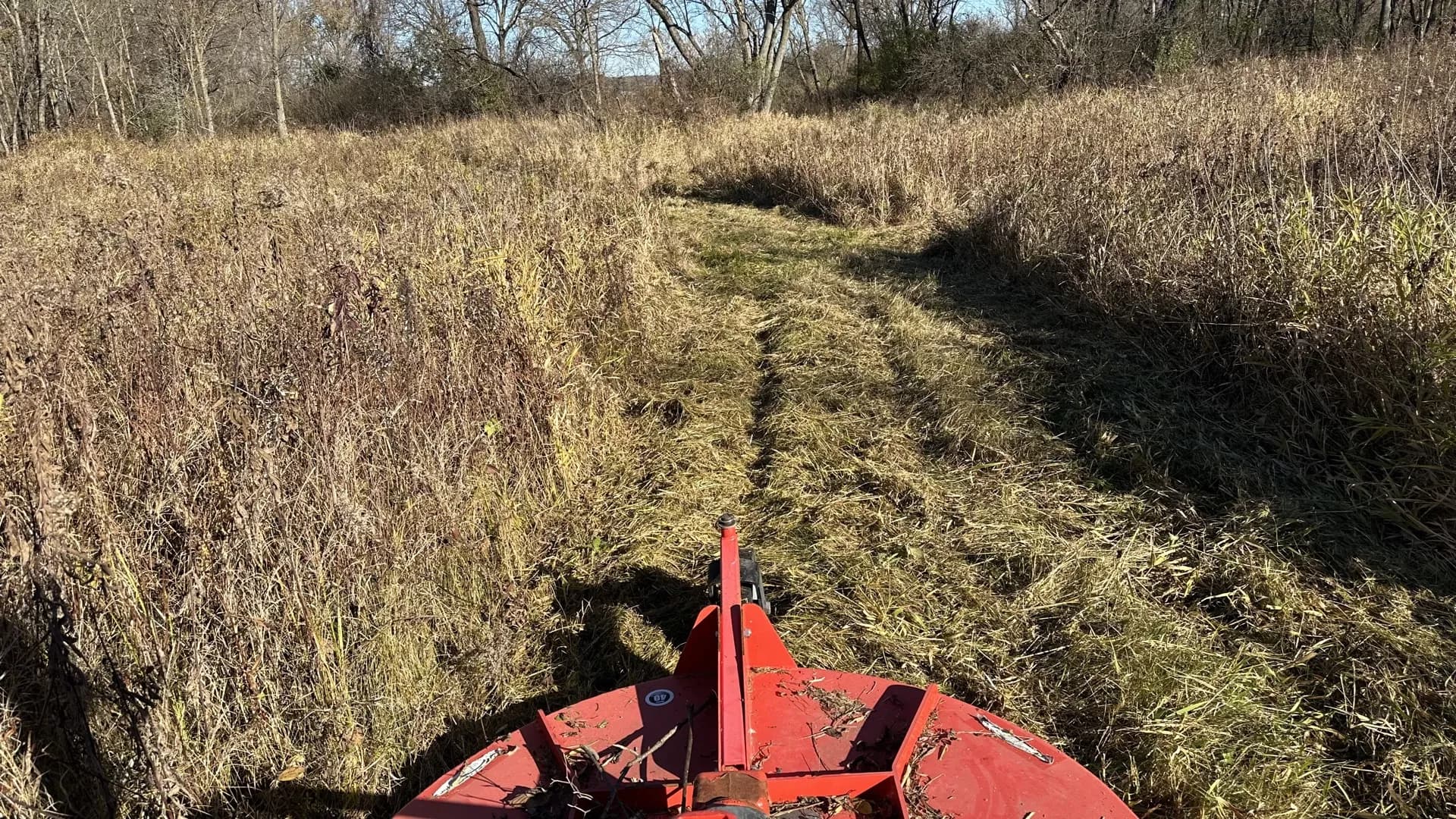
Brush clearing in central Wisconsin usually runs $400 to $1,200 per acre. Light grown-up fields and fence lines sit at the low end, and thick woody brush full of buckthorn and honeysuckle sits at the top. The price comes down to how dense the brush is, how big the woody stems have gotten, the lay of the land, and how easy it is to get a machine in. Brush clearing is lighter and cheaper than full land clearing because we are mowing and mulching brush, not pulling mature trees and grubbing out stumps.
We clear brush out of Oxford, WI across Marquette, Adams, Waushara, Columbia, and the rest of the counties around us. Some of it is a pasture that has not been mowed in five years and is filling in with prickly ash and sapling oak. Some of it is a fence line swallowed by brush, an overgrown trail through hunting land, or an old field a new owner wants back in shape. The number is different for every piece, but the things that set it are the same. Here is how brush clearing is priced in central Wisconsin and how to know what your job will run.
How Much Does Brush Clearing Cost Per Acre in Wisconsin?
Most brush clearing around here is priced by the acre or as a flat price for the whole job after a look. The biggest thing that moves it is how thick and how woody the brush has gotten. A field that grew up two summers ago clears a lot faster than one that has been going wild for fifteen years and has stems as thick as your wrist. Here is the range you can expect by how heavy the brush is.
| Brush Type | What It Looks Like | Typical Cost Per Acre |
|---|---|---|
| Light | Tall grass, weeds, scattered saplings under 2 in | $400 to $600 |
| Medium | Dense brush, saplings 2 to 4 in, scattered larger stems | $600 to $900 |
| Heavy | Thick woody brush, buckthorn and honeysuckle thickets, stems 4 to 6 in | $900 to $1,200+ |
These are working ranges, not a quote. A small job carries a minimum or a flat project rate, because loading the machine, driving out, and unloading costs the same whether we clear half an acre or five. We give you a flat price for the job after a free on-site look, so you see the number before any work starts. Bigger jobs come out lower per acre than small ones for the same reason.
What Drives the Price Up or Down
- How dense the brush is. This is the biggest driver. Thin, scattered brush clears fast. A solid wall of stems takes more passes and more machine time per acre.
- Stem size and how woody it is. Soft, green brush mows quick. Old buckthorn, prickly ash, and gray dogwood that have gone woody are slower and harder on the equipment, so they cost more.
- Terrain. The flat, sandy ground around Oxford, Westfield, and the Central Sands is the easiest and cheapest to work. The hills and clay of the Driftless Area around Baraboo run higher because the machine works slower on slopes.
- Total acreage. Mobilization is a fixed cost. On a one-acre job it is a big share of the bill. Spread it over ten or twenty acres and it barely moves the per-acre number.
- Access. If we can drive straight to the work from a road or field edge, the job goes fast. A back corner with no way in needs a path cut first, and that adds time.
- What is hiding in the brush. Old barbed wire, fence posts, dumped junk, and field rock are common in grown-up land around here. They slow the work down and have to be dealt with by hand, so a clean piece is cheaper than one full of surprises.
Brush Hogging vs. Forestry Mulching: Which One Do You Need?
People call a lot of different work "brush clearing," and the method changes both the price and what you are left with. The two we use most are brush hogging and forestry mulching. Here is how they compare.
| Method | What It Handles | What It Leaves | Best For |
|---|---|---|---|
| Brush hogging | Grass, weeds, light brush, saplings under 2 in | Mowed surface that regrows | Keeping fields, trails, and pasture open year to year |
| Forestry mulching | Heavy brush, saplings, small trees up to 8 in | Mulch layer on the ground, stumps ground low | Reclaiming land that has gone wild, one time |
| Hand clearing | Selective stems, tight or sensitive spots | Cleared ground, debris hauled or piled | Small areas a machine cannot reach |
Brush hogging is rotary mowing. It knocks down grass, weeds, and light brush and is the cheaper, faster choice for land you want to keep open on a regular basis. It does not kill the roots, so the brush comes back and you mow it again next year. Forestry mulching grinds heavier brush and small trees into a mulch layer in one pass and takes the stems down to the ground, which sets the land back far more than a mow. If you are bringing a badly overgrown field back, mulching is usually the right first step. Once it is open, brush hogging keeps it that way. We will look at what you have and tell you which one fits.
Is Brush Clearing Priced by the Hour or by the Acre?
Some contractors quote brush work by the hour, especially for brush hogging where the job is open-ended. We usually quote the whole job, either by the acre or as a flat price, so you know the number up front instead of watching a clock. Hourly billing adds up fastest when the brush is woody, the ground is rough, or there is a lot of fence wire and junk to work around, because all of that slows production. When we give you a flat price after a free look, that risk is on us, not you. If you do get an hourly quote from someone, ask them for an estimate of total hours so you can compare it to a per-acre price.
When Is the Best Time for Brush Clearing in Wisconsin?
You can clear brush most of the year in central Wisconsin, but a few seasons work better than others.
- Winter, on frozen ground. December through February is often the best time. Frozen ground holds the machine up, there is no leaf cover hiding what is in there, and we can sometimes offer better pricing because production is faster and there is less risk of rutting your land.
- Late summer and fall. Dry ground and lower bug pressure make this a good stretch. It is also a popular window for hunting land work ahead of the season.
- Spring thaw, the one to avoid. March through early May can turn even sandy ground soft. We hold off when conditions would rut a property, which can push scheduling out a few weeks.
If you are clearing for a food plot or shooting lanes, the dormant season also makes it easy to see the lay of the land and cut clean lines through the brush.
Does Brush Clearing Help With Invasive Species?
It is a big part of why people call us. A lot of the brush we clear around Montello, Portage, and the Wisconsin Dells area is invasive: common buckthorn, honeysuckle, and autumn olive, all on the Wisconsin DNR's NR 40 restricted list. Mowing or mulching the top growth gets your land usable again and knocks the seed source down, but cutting alone does not kill the roots on those species. They resprout. To actually beat them back you pair the clearing with a cut-stump or follow-up herbicide treatment, usually in the dormant season. Our invasive species control work handles that side of it, and we will lay out a plan that keeps the brush from coming right back.
Get a Free Brush Clearing Estimate
We clear brush, hog overgrown fields, and reclaim grown-up land across central Wisconsin, including Oxford, Montello, Westfield, Portage, Baraboo, Wisconsin Dells, and the surrounding 8 counties. Whether it is one fence line or forty acres of overgrown pasture, we will come look and give you a straight price. Call (608) 292-3934 or request your free estimate online.
Last updated: June 2026
Frequently Asked Questions About Brush Clearing in Wisconsin
How much does brush clearing cost per acre in Wisconsin?
Brush clearing in central Wisconsin usually runs $400 to $1,200 per acre. Light grown-up fields and fence lines sit at the low end, and thick woody brush full of buckthorn and honeysuckle sits at the top. Small jobs carry a minimum or flat rate because mobilization costs the same on a small job as a large one. We give a flat price after a free on-site look.
What is the difference between brush hogging and forestry mulching?
Brush hogging is rotary mowing that knocks down grass, weeds, and light brush and is the cheaper choice for land you keep open every year. It does not kill the roots, so the brush regrows. Forestry mulching grinds heavier brush and small trees up to about 8 inches into a mulch layer in one pass and takes the stems to the ground, which is the better first step for reclaiming badly overgrown land.
Is brush clearing priced by the hour or by the acre?
Some contractors quote brush work by the hour, but we usually quote the whole job by the acre or as a flat price so you know the number up front. Hourly billing climbs fastest when the brush is woody, the ground is rough, or there is fence wire and junk to work around. A flat price after a free look puts that risk on us instead of you.
What is the best time of year to clear brush in Wisconsin?
Winter on frozen ground is often best, since the machine works fast, there is no leaf cover, and pricing can be better. Late summer and fall are also good with dry ground and fewer bugs. Spring thaw, roughly March through early May, is the season to avoid because soft ground can rut your property.
Will cleared brush grow back?
Often, yes. Mowing or mulching takes off the top growth but does not kill the roots of species like buckthorn, honeysuckle, and autumn olive, which resprout. To keep brush from coming back you pair the clearing with a cut-stump or follow-up herbicide treatment, usually in the dormant season. For fields you simply want to keep open, regular brush hogging holds the regrowth in check.
Does brush clearing help with invasive species?
Yes. Much of the brush we clear in central Wisconsin is invasive buckthorn, honeysuckle, and autumn olive, all on the Wisconsin DNR's NR 40 restricted list. Clearing the top growth makes the land usable and reduces the seed source, but lasting control needs a paired herbicide treatment because those species resprout from the roots.
Do you clear brush in my area?
We clear brush across an eight-county area of central Wisconsin from our base in Oxford, including Marquette, Adams, Waushara, Columbia, Sauk, Juneau, Portage, and Green Lake counties. That covers Oxford, Montello, Westfield, Portage, Baraboo, Wisconsin Dells, and the towns around them. Call (608) 292-3934 or request a free estimate online.