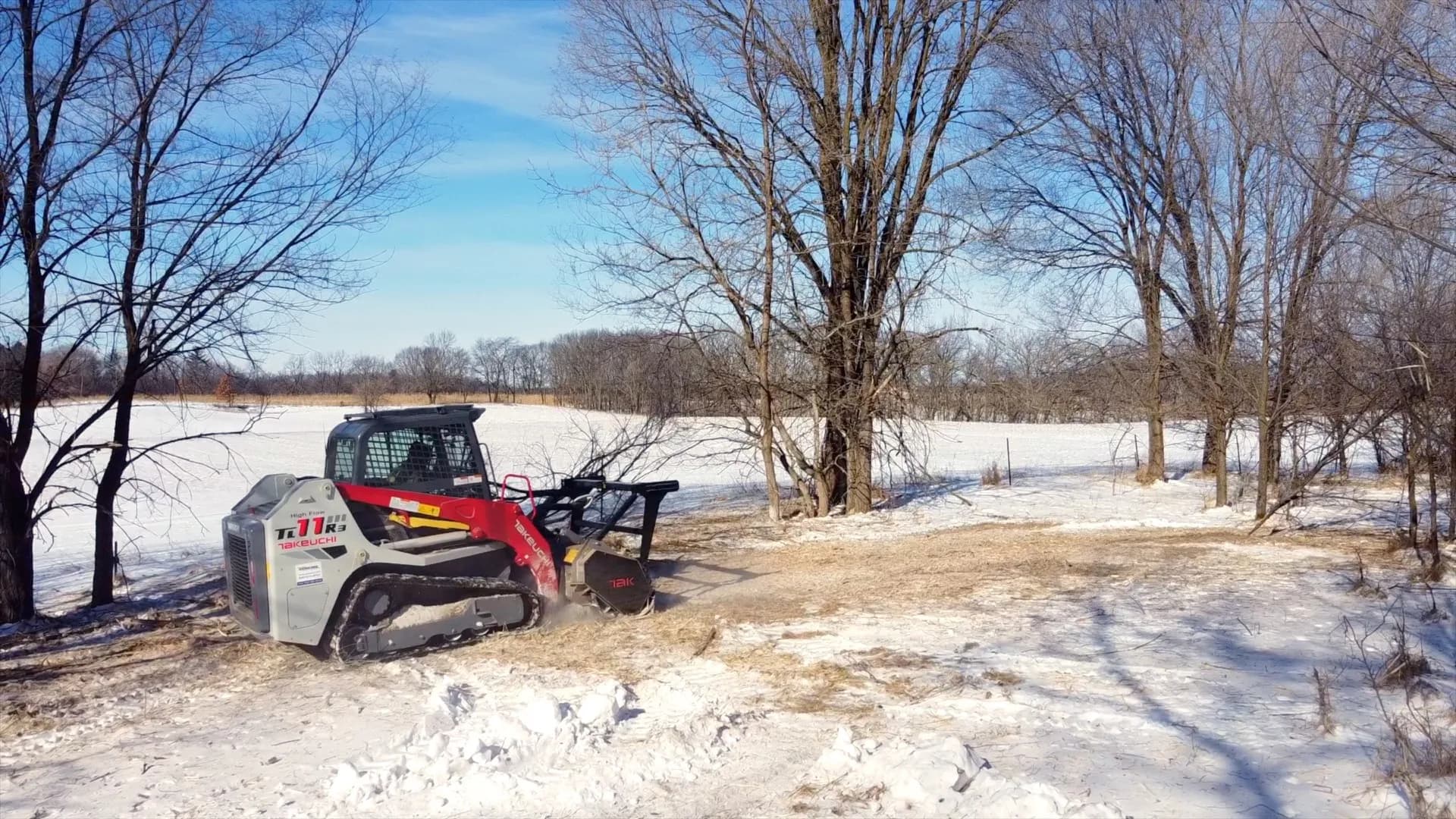
Hunting land clearing in Wisconsin is the targeted clearing of brush, saplings, and small trees to create food plots, shooting lanes, bedding cover edges, and trail systems on private hunting property. The goal is not to clear the woods. The goal is to shape habitat so deer, turkey, and other game spend more time on your land, and so you can hunt them. We do this work across central Wisconsin from our base in Oxford, WI.
The Five Project Types Most Wisconsin Hunters Ask For
1. Food plots
Most food plot work in central Wisconsin runs between a half acre and three acres per plot. We mulch the standing vegetation, leave the wood chip layer in place to break down, and you plant directly into it the same season or the next. Common food plot mixes for our area: brassica blends, clover, winter rye, oats. Adam can clear it; what you plant is your call. See our food plot clearing service and the food plot creation guide for more.
2. Shooting lanes
Shooting lanes are cleared corridors that fan out from a stand or blind. Width is up to you. 8 to 15 feet is typical for archery, wider for rifle. The mulcher cuts a clean lane to grade in one pass, and the mulch on the ground keeps weeds down for one or two seasons.
3. Bedding cover edges
Deer bed in thick cover. The trick is to create more of it without destroying the cover you already have. We do edge work, clearing 30 to 50 foot strips along the downwind edge of bedding areas to encourage thicker regrowth, opening hinge cuts and slash piles where appropriate, and taking out the high canopy so understory thickens up. This is project-specific work; we walk it with you and lay out the plan first.
4. Trail systems
Access trails for ATV, side-by-side, or walking. We cut clean lanes 6 to 10 feet wide, mulch the stumps to grade, and you have a trail system that holds up under weather and use. Trails can also double as fire breaks and property line markers.
5. Sanctuary and refuge clearing
Some hunters want a portion of their land left alone, a sanctuary the deer use during pressure. Clearing around the edge (without going inside) can make a sanctuary more attractive without ruining what makes it work. This is a planning conversation as much as a clearing job.
When to Do Hunting Land Clearing in Wisconsin
Timing matters more for hunting work than for most clearing jobs. Here is the rough schedule we follow:
- Late winter (February to mid-March): best window for most habitat work. Frozen ground, deer pressure is low, and you have months for the disturbance to settle before fall.
- Spring (April to May): good for food plot prep if you are planting that season. Avoid bedding edge work because fawning starts in late May.
- Summer (June to August): shooting lanes, trail systems, and food plot maintenance are fine. Bedding work is acceptable but the disturbance is closer to the season.
- Early fall (September): last call for any major clearing before the season. Deer pattern around it within two to three weeks.
- Hunting season (mid-September through January): we generally do not run loud equipment on hunting properties during the season unless the owner asks.
Wisconsin DNR Rules Hunters Should Know
Most habitat work on private hunting land is unregulated. A few things do trigger rules:
- Wetland setbacks: if your land includes a marsh, fen, or anything on the Wisconsin Wetland Inventory, there are buffer requirements. We will flag it during the estimate.
- NR 40 invasive species: if you are clearing buckthorn, honeysuckle, or autumn olive, the rule is to prevent further spread. Cut-stump herbicide is standard. Mulching alone will not kill the root system.
- Managed Forest Law (MFL): if your land is enrolled in MFL, talk to your DNR forester before any clearing. Some habitat work is allowed under your management plan; some is not.
- Deer Management Assistance Program (DMAP): not a restriction, but if you are in DMAP, your biologist can tell you what habitat work fits your management goals.
- Migratory bird nesting: avoid clearing in areas with active songbird nests between April 15 and August 15. Most hunting habitat work sidesteps this by timing.
What It Costs
Hunting land clearing in Wisconsin generally runs $600 to $1,200 per acre for typical food plot, lane, and bedding edge work. Tight, careful work like sanctuary edges or selective bedding cuts can run higher per hour because we are slowing down to do it right. Trail systems are quoted by the linear foot or as a flat project rate.
Real numbers from recent jobs in our area:
- 1.5-acre food plot in Montello, light brush, sandy ground: half-day project price.
- 4 acres of food plots and 800 feet of shooting lane in Adams County: multi-day project price.
- Half-mile of ATV trail through mixed hardwoods, 8 feet wide: full-day project price.
We do not publish flat per-acre prices because every property is different. A free on-site estimate is the only way to get a real number for your land.
How We Plan a Hunting Land Project
- Walk the property. Adam meets you on the ground. Bring your hunting maps, stand locations, and what you have noticed about deer movement.
- Identify what to clear and what to protect. Some of the best hunting work is what we do not cut.
- Sequence the work. Bedding edges first, then food plots, then lanes, then trails. Order depends on what you have and what you need.
- Quote it flat. Written project price within 24 to 48 hours.
- Run the work. Adam runs the machine. You can be there or not.
Get a Free Estimate
If you have hunting land in central Wisconsin and want help shaping it, call (608) 292-3934 or request a free estimate. We work across Marquette, Adams, Waushara, Portage, Juneau, Columbia, Sauk, and Green Lake counties.
Last updated: April 2026
Frequently Asked Questions
What is hunting land clearing?
Hunting land clearing is targeted brush and tree removal on private hunting property to create food plots, shooting lanes, bedding cover edges, sanctuary buffers, and access trails. The work shapes habitat to attract and hold deer, turkey, and other game while making the property easier to hunt.
When is the best time to clear hunting land in Wisconsin?
Late winter, February to mid-March, is the best window for most habitat work. The ground is frozen, deer pressure is low, and you have months for the disturbance to settle before fall hunting. Avoid bedding edge work during fawning season (late May into June) and avoid running heavy equipment during the hunting season itself.
How big should a food plot be in Wisconsin?
Most central Wisconsin food plots run between a half acre and three acres. Smaller hidden plots (a quarter acre or less) work as kill plots near stand sites. Larger destination plots of two to three acres hold deer longer and take more pressure. Plot size depends on how much surrounding cover you have and how many deer you are feeding.
Will forestry mulching kill buckthorn and honeysuckle?
Mulching takes down the standing vegetation but does not kill the root system. To actually kill buckthorn, honeysuckle, or autumn olive (all NR 40 species in Wisconsin), the cut stumps need a herbicide application within a few hours of cutting. That is the only reliable way to keep them from re-sprouting.
How wide should a shooting lane be?
For archery, 8 to 15 feet wide is typical. For rifle or muzzleloader, 15 to 25 feet gives you a safer shooting window and accounts for branch growth between seasons. Wider is not always better. Too wide reduces deer comfort moving through the area and can alert them to the lane.
Do I need a DNR permit to clear hunting land in Wisconsin?
For most private property habitat work, no permit is needed. Permits or notifications come into play if you are working in mapped wetlands, near navigable waterways, on land enrolled in Managed Forest Law, or clearing timber volumes that trigger harvest reporting. We flag any of that during the free estimate so you know before we start.
Can I plant a food plot the same year you clear it?
Yes, in most cases. Mulched ground in central Wisconsin sandy soil is plantable within a few weeks. The mulch layer holds moisture and breaks down to add organic matter. Cleared in early spring, planted by late spring; cleared in summer, planted in fall for a winter rye or brassica plot.
How does forestry mulching affect deer movement?
Short term, deer avoid recently disturbed areas for two to three weeks. Long term, mulching usually increases deer use because the mulched understory thickens up with new growth. That regrowth provides better browse and cover. Bedding edges in particular get more deer use after edge work because the regrowth creates the dense cover deer prefer for daytime bedding.
What does it cost to clear an acre of hunting land?
Most hunting land clearing in central Wisconsin runs $600 to $1,200 per acre. Light brush on flat sandy ground costs less. Tight selective work like sanctuary edges, hinge cuts, and careful bedding edges runs higher because the machine moves slower. We quote flat project pricing after a free on-site visit.
Will clearing hunting land hurt my MFL enrollment?
Possibly. Land enrolled in Wisconsin Managed Forest Law has a management plan that governs what you can do. Some habitat work like small openings, trails, and food plots is allowed under most plans. Major clearing or food plot conversion may require a plan amendment. Talk to your DNR forester before scheduling work on MFL land.
Do you do habitat consulting or just the clearing?
We do the clearing. Adam will tell you what we see when we walk your property and offer suggestions on sequencing and what to leave alone, but we are not biologists. For deeper habitat planning, work with your county DNR biologist (free) or a private habitat consultant.