Tree removal in Wisconsin typically runs $200 to $500 for a small tree, $500 to $1,000 for a medium one, and $1,000 to $2,000 or more for a large mature oak or maple. Big hazardous trees close to a house or power line can run $2,000 to $3,500 and up. The price comes down to the tree's height, trunk size, species, health, and how close it is to something it could land on.
We remove trees out of Oxford, WI across Marquette, Adams, Waushara, and the surrounding counties. Some are dead ash a homeowner has been eyeing nervously for two years. Some came down across a driveway in a July windstorm at two in the morning. The cost is different for every one, but the things that drive it are always the same. Here is how tree removal pricing works in central Wisconsin and how to know what your job will run.
How Much Does Tree Removal Cost in Wisconsin?
Most tree removal around here is priced per tree after a look at the job, not by the hour. The single biggest factor is size, because a taller tree with a thicker trunk means more weight to bring down safely, more cuts, and more cleanup. Here is the range you can expect by tree size.
| Tree Size | Common Examples | Typical Height | Typical Cost |
|---|---|---|---|
| Small | Young birch, small aspen, ornamental | Under 30 ft | $200 to $500 |
| Medium | Box elder, smaller maple | 30 to 60 ft | $500 to $1,000 |
| Large | Mature oak, maple, ash | 60 to 80 ft | $1,000 to $2,000 |
| Very large or hazardous | Big oak near a house or power line | 80 ft and up | $2,000 to $3,500+ |
These are working ranges, not a quote. Two trees the same height can land at different prices once you factor in where they stand and what shape they are in. We give you a flat price for the job after a free on-site look, so you see the number before any saw runs.
What Pushes the Price Up
- How close it is to something. A tree in an open field drops in one piece. A tree leaning over your roof has to come down in sections with ropes, which takes longer and costs more.
- Trunk diameter. Two trees the same height price differently if one has a much thicker trunk. More wood means more time and more to haul.
- Dead, leaning, or storm-damaged. A dead ash or a half-fallen tree is unpredictable and more dangerous to cut, so it runs more than a healthy tree of the same size.
- Equipment access. If we can get a truck or skid steer to the tree, the work goes faster. A tree boxed into a tight backyard with no access is mostly hand work.
- Stump and debris. Grinding the stump and hauling the wood off site add to the base price. Leaving the logs for firewood or the chips for a trail can bring it down.
Storm Damage and Emergency Tree Removal
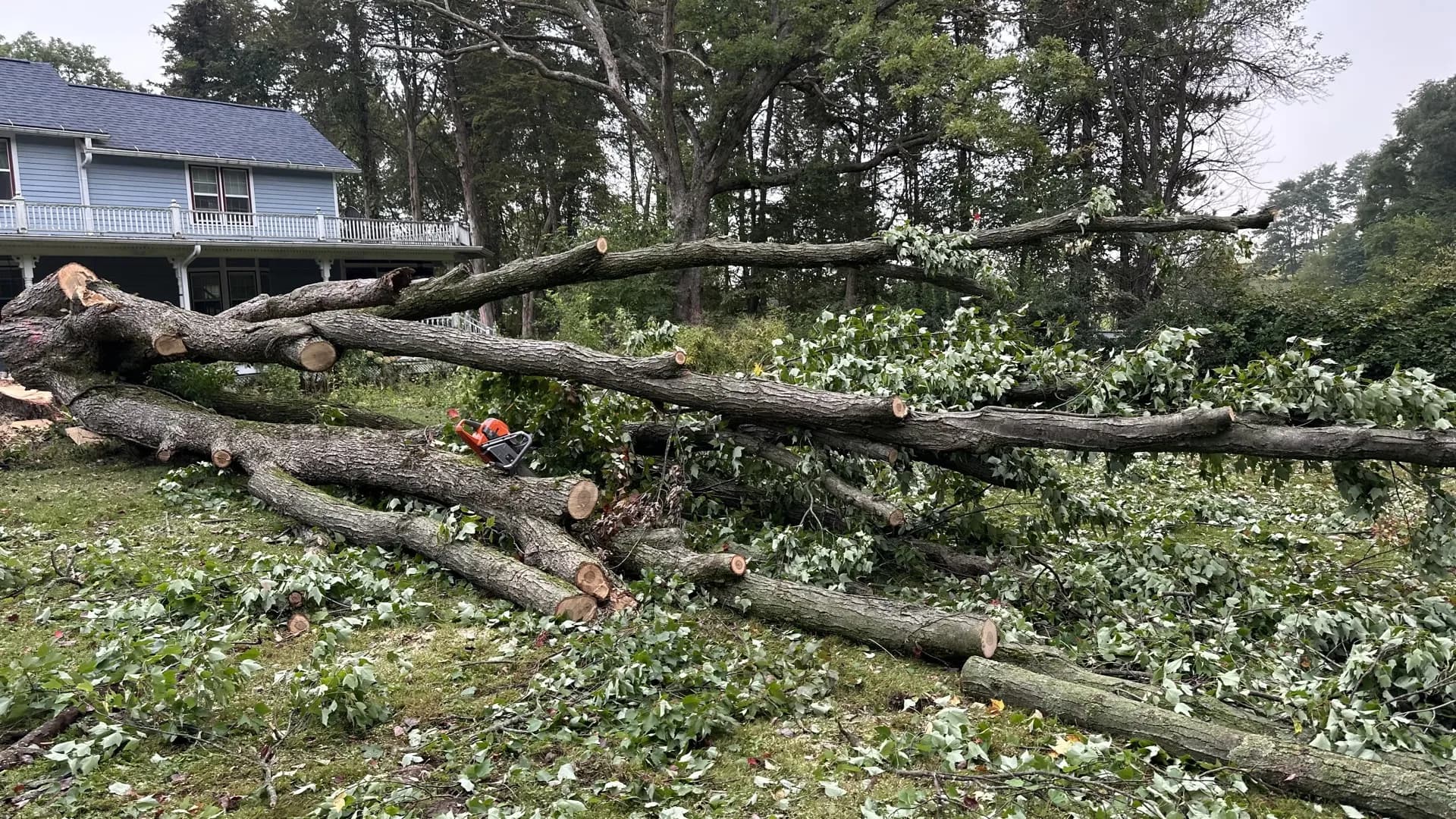
Central Wisconsin takes hard summer thunderstorms, straight-line winds, and the occasional severe blowdown. Add heavy wet snow and ice in winter and you have two seasons that put trees on houses, driveways, and fences. When that happens, the job stops being about price and starts being about getting it off your house safely.
What to Do When a Tree Comes Down
- Get everyone clear. Stay well away from any tree touching a power line, and call the utility, not us, if wires are involved. A downed line can energize a wet tree from a distance.
- Take photos before anything moves. Your insurance adjuster will want to see the tree where it landed, so document it first.
- Call us. We will tell you whether it is a same-day hazard or something that can safely wait a day or two.
Does Insurance Cover It?
Often, yes, when the tree hits something. If a storm drops a tree on your house, garage, or fence, homeowners insurance usually covers the removal and the repair minus your deductible. A tree that falls in the open yard and damages nothing is usually not covered. We give you an itemized estimate you can hand straight to your adjuster. Read your own policy, because coverage varies from one to the next.
When Is the Best Time to Remove a Tree in Central Wisconsin?
For a hazard, the best time is now. A dead or leaning tree over a building does not get safer by waiting. For planned, non-urgent removals, timing matters here for two reasons specific to our area: oak wilt and frozen ground.
Oak Wilt and the April-to-July Rule
The Wisconsin DNR warns against pruning or cutting oak trees from April through July. That is when the sap beetles that spread oak wilt are most active, and a fresh cut on an oak is an open invitation for them. Oak wilt is a real problem through the oak country in Adams, Waushara, and Marquette counties, and it can kill a healthy red oak in a single season. If your removal is an oak and it is not an emergency, we schedule it outside that window. A storm-damaged or already-dead oak is a different story, and we handle those as needed.
Dead Ash and the Emerald Ash Borer
Emerald ash borer has worked through central Wisconsin and killed a lot of ash. A dead ash gets brittle fast, which makes it more dangerous and more expensive to take down the longer it stands. If you have a standing dead ash near the house or driveway, it is better to deal with it before it starts dropping limbs on its own.
Winter Removals
Winter is an underrated time for tree work here. Frozen ground lets us bring equipment in without rutting a soft yard, the leaves are down so the tree is lighter and easier to read, and the schedule is often more open. If your removal can wait, a frozen-ground winter job is frequently the cleanest way to get it done.
Does Tree Removal Include the Stump?
Not automatically. Standard removal cuts the tree down to a low stump and clears the wood. Grinding the stump out is a separate step, usually $100 to $400 per stump depending on diameter, or priced by the inch when there are several. We handle stump grinding right along with removal so you are not left with a yard full of stumps to mow around. If you have a row of stumps from an old fence line or a cleared lot, we price those as a batch, which comes out cheaper per stump than doing them one at a time. We also handle trimming and pruning when a tree needs work but not removal.
One Tree or a Whole Lot? Tree Removal vs. Forestry Mulching
If you are dealing with one tree, a handful of trees, or anything near a building, that is a tree removal job. If you are looking at an acre of brush, saplings, and small trees you want gone, taking them out one by one is the slow, expensive way to do it. Forestry mulching grinds standing brush and small trees into mulch in a single pass and leaves the ground ready to use. We do both, and the right call depends on the size of the trees and what you want the land to become. Clearing for a food plot or a building site is usually mulching. A single big oak by the house is a removal. Not sure which you need? We will tell you when we look at it.
Get a Free Tree Removal Estimate
We remove trees, grind stumps, and handle storm cleanup across central Wisconsin, including Oxford, Montello, Westfield, Portage, Baraboo, Wisconsin Dells, and the surrounding 8 counties. Whether it is one hazardous oak by the house or a yard full of storm damage, we will come look at it and give you a straight price. Call (608) 292-3934 or request your free estimate online.
Last updated: June 2026
Frequently Asked Questions About Tree Removal in Wisconsin
How much does tree removal cost in Wisconsin?
Most tree removal runs $200 to $500 for a small tree, $500 to $1,000 for a medium tree, and $1,000 to $2,000 or more for a large mature tree. Hazardous trees close to a house or power line cost more because they have to come down in sections. We give a flat price per tree after a free on-site look.
How much does it cost to remove a large oak tree?
A large mature oak, usually 60 to 80 feet, typically runs $1,000 to $2,000. A very large oak over 80 feet, or one leaning over a building, can run $2,000 to $3,500 or more because it has to be taken down in pieces with ropes. Trunk diameter and how close it stands to the house both move the number.
Does homeowners insurance cover storm damage tree removal?
Usually yes, if the tree hits something. When a storm drops a tree on your house, garage, or fence, homeowners insurance generally covers the removal and repair minus your deductible. A tree that falls in the open yard and damages nothing is usually not covered. We provide an itemized estimate for your adjuster, but read your own policy since coverage varies.
When should you avoid cutting oak trees in Wisconsin?
The Wisconsin DNR advises against pruning or cutting oak trees from April through July. That is when the sap beetles that spread oak wilt are most active, and fresh cuts attract them. For non-emergency oak removals we schedule outside that window. Storm-damaged or already-dead oaks are handled as needed.
How much does stump grinding cost?
Stump grinding usually runs $100 to $400 per stump depending on diameter, or it is priced by the inch when there are several. Grinding a batch of stumps from a cleared lot or an old fence line costs less per stump than doing them one at a time.
Do you offer emergency tree removal?
Yes. Central Wisconsin storms bring trees down on houses and driveways, and we handle storm cleanup and emergency removals. If a tree is touching a power line, call your utility first, then call us. The phone is the fastest way to reach us for an urgent hazard.
Is tree removal cheaper in winter?
It can be. Frozen winter ground lets us bring equipment in without rutting a soft yard, the leaves are down so the tree is lighter and easier to drop cleanly, and schedules are often more open. If your removal is not urgent, a winter job on frozen ground is often the cleanest and can be the better value.